
Baranauskas, M. N., Constantini, K., Paris, H. L., Wiggins, C. C., Schlader, Z. J. & Chapman, R. F. (2021). Heat Versus Altitude Training for Endurance Performance at Sea Level. Exercise and Sport Sciences Reviews, 49(1), 50–58. https://doi.org/10.1249/JES.0000000000000238
Greer, S. N., Metcalf, J. L., Wang, Y. & Ohh, M. (2012). The updated biology of hypoxia-inducible fac-tor. The EMBO Journal, 31(11), 2448–2460. https://doi.org/10.1038/emboj.2012.125
Hasday, J. D. & Singh, I. S. (2000). Fever and the heat shock response: distinct, partially overlapping processes. Cell Stress & Chaperones, 5(5), 471. https://doi.org/10.1379/1466-1268(2000)005<0471:FATHSR>2.0.CO;2
Lundby, C., Hamarsland, H., Hansen, J., Bjørndal, H., Berge, S. N., Hammarstöm, D. et al. (2023). Hematological, skeletal muscle fiber, and exercise performance adaptations to heat training in elite female and male cyclists. Journal of Applied Physiology (Bethesda, Md. : 1985), 135(1), 217–226. https://doi.org/10.1152/japplphysiol.00115.2023
Lundby, C., Montero, D. [D.] & Joyner, M. (2017). Biology of VO2 max: looking under the physiology lamp. Acta Physiologica (Oxford, England), 220(2), 218–228. https://doi.org/10.1111/apha.12827
Rønnestad, B. R., Hamarsland, H., Hansen, J., Holen, E., Montero, D. [David], Whist, J. E. et al. (2021). Five weeks of heat training increases haemoglobin mass in elite cyclists.Experimental Physiology, 106(1), 316–327. https://doi.org/10.1113/EP088544
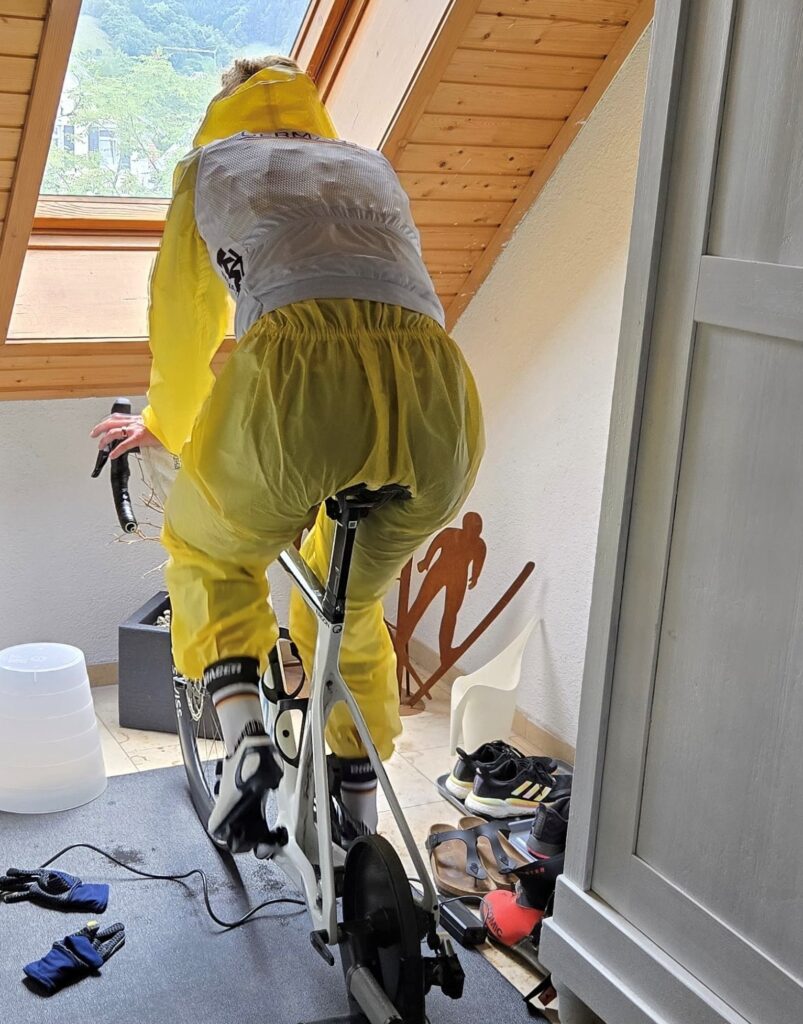
Rønnestad, B. R., Hansen, J., Bonne, T. C. & Lundby, C. (2022). Case Report: Heat Suit Training May Increase Hemoglobin Mass in Elite Athletes. International Journal of Sports Physiology and Performance, 17(1), 115–119. https://doi.org/10.1123/ijspp.2021-0033